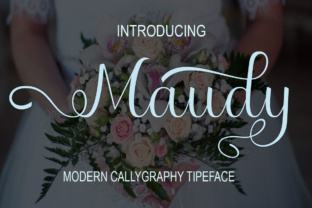
Maudy: A Playful Handwritten Calligraphy Font for Every Project
If you're looking for a font that brings a personal, artistic touch to your designs, Maudy might be the perfect choice. This playful handwritten calligraphy font is created entirely by hand, giving it a unique and authentic feel that stands out in a sea of digital typefaces. Whether you're working on a logo, social media post, or a creative project, Maudy offers versatility and charm that can elevate your work.
But while Maudy has a lot to offer, it's important to understand how to use it effectively. Many people overlook key details when choosing and applying this font, which can lead to less-than-optimal results. Let's explore what makes Maudy special, common pitfalls to avoid, and how to make the most of it in your projects.
What Makes Maudy Unique?
Maudy isn't just another font—it's a handcrafted creation that adds character and warmth to any design. Unlike mass-produced typefaces, Maudy carries the subtle imperfections and variations of real handwriting, making it ideal for projects that require a personal or artistic flair. Its flowing strokes and playful style make it especially popular for branding, invitations, and creative content where a human touch matters.
However, its hand-drawn nature means it may not be suitable for every situation. For example, if you're designing something that requires a clean, professional look, Maudy might not be the best fit. It's important to consider the tone and purpose of your project before deciding to use it.
Common Mistakes When Using Maudy
One of the most frequent mistakes people make with Maudy is using it inappropriately. While its style is eye-catching, it can be overwhelming if overused. For instance, using Maudy for large blocks of text in a website or document can reduce readability and make your message harder to follow. This is especially true for readers who are not used to reading handwritten fonts.
Another common error is not checking the font's licensing terms. Some users assume that all handwritten fonts are free to use, but that's not always the case. Maudy, like many custom fonts, may require a purchase or specific license for commercial use. Failing to verify these details can lead to legal issues down the line, especially if you're using the font for a business or public-facing project.
Why Licensing Matters
Before downloading or using Maudy, always review the license agreement. Some fonts are available for personal use only, while others allow for commercial use with proper attribution. If you're unsure, it's better to contact the designer or check the official source for clarity. Ignoring these rules can result in costly penalties or the need to replace the font later, which affects both time and budget.
How to Choose the Right Projects for Maudy
Maudy shines in projects that benefit from a personal or artistic touch. Think of logos, greeting cards, social media graphics, or even book covers. Its fluid style can add a sense of creativity and authenticity that other fonts might lack. However, it's important to balance its use so it doesn't overshadow the message or design.
A good approach is to use Maudy as a highlight rather than the main text. For example, you might use it for a headline or title while pairing it with a more standard font for body text. This combination keeps the design visually appealing without sacrificing readability.
Practical Tips for Using Maudy Effectively
To get the best results with Maudy, start by testing it in different contexts. Try it in a mock-up or sample design to see how it looks at various sizes and against different backgrounds. This helps you determine whether it works well with your overall design scheme.
Also, consider the audience you're targeting. If your project is aimed at a professional or formal setting, Maudy may not be the best choice. But if your goal is to connect with a creative or casual audience, it can be a powerful tool. Understanding your audience's expectations will help you decide whether Maudy fits the tone of your work.
Examples of Better Approaches
Instead of using Maudy for an entire website, try incorporating it into specific elements like headers, buttons, or icons. This way, you maintain a cohesive look while still benefiting from its unique style. For instance, a blog might use Maudy for the title of each post, while the rest of the text remains in a more traditional font.
Another smart move is to pair Maudy with complementary fonts. Look for fonts that have a similar weight or style to create harmony in your design. This avoids clashing and ensures your message is clear and visually pleasing.
What to Check Before Using Maudy
Before finalizing your decision to use Maudy, take the following steps:
- Review the license terms to ensure you're allowed to use the font for your intended purpose.
- Test it in different sizes and formats to see how it performs in various applications.
- Consider the context of your project to determine if Maudy aligns with your goals and audience.
- Check for legibility—especially if you plan to use it for longer text or in small sizes.
By taking these precautions, you can avoid potential issues and make sure Maudy enhances, rather than hinders, your work.