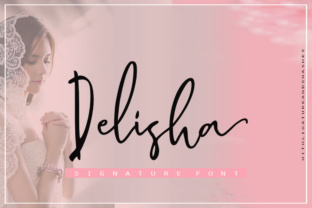
Delisha: A Modern Script Font for Stylish Design Projects
Delisha is a contemporary script font that offers a unique blend of elegance and versatility. Designed with a feminine touch and an irregular baseline, it brings a refined aesthetic to any design project. Whether you're working on editorial layouts, fashion graphics, or branding materials, Delisha can add a sophisticated flair that stands out.
This font is particularly well-suited for projects that require a sense of grace and individuality. Its fluid strokes and dynamic structure make it ideal for headlines, logos, and other visual elements where a personal and artistic touch is desired. However, like any typeface, Delisha has its strengths and limitations, and understanding these can help you determine if it's the right choice for your specific needs.
What Makes Delisha Stand Out?
Delisha distinguishes itself through its modern design and expressive character set. The font features a slightly irregular baseline, which gives it a more organic and handcrafted appearance compared to more rigid script fonts. This characteristic can be especially appealing for designers looking to convey a sense of movement or creativity in their work.
The font includes a comprehensive range of characters, including uppercase and lowercase letters, numbers, punctuation, and special symbols. This makes it suitable for a wide variety of applications, from short headlines to longer text blocks. Its legibility remains consistent even at smaller sizes, making it a practical option for both print and digital media.
When Delisha Is a Strong Fit
Delisha is an excellent choice for projects that emphasize style, femininity, and a modern aesthetic. It works well in fashion-related designs, such as magazine covers, clothing labels, and promotional materials. Its graceful curves and flowing lines can enhance the visual appeal of any editorial layout, adding a touch of sophistication without being overly ornate.
For branding purposes, Delisha can be used to create a distinctive identity that feels both professional and approachable. Its irregular baseline adds a subtle uniqueness that can help a brand stand out in a competitive market. Additionally, the font’s versatility allows it to be paired effectively with other typefaces, making it a flexible option for multi-font design projects.
Situations Where Alternatives May Be Better
While Delisha offers many advantages, it may not be the best fit for every project. In cases where clarity and readability are paramount—such as body text in long-form documents or signage—it may be more appropriate to choose a sans-serif or serif font that prioritizes legibility over stylistic flair.
Additionally, Delisha’s irregular baseline might not align with the design language of certain projects. For example, in minimalist or highly structured layouts, a more uniform typeface could be preferable. If the goal is to maintain a clean and neutral look, alternatives such as Helvetica, Futura, or Lato may offer a more balanced solution.
Key Considerations When Using Delisha
Before incorporating Delisha into your design work, consider the context in which it will be used. Its feminine and stylized appearance may not be suitable for all audiences or industries. For instance, in corporate or technical environments, a more formal typeface might be more appropriate.
Another factor to consider is the availability of the font. Delisha may not be included in all design software by default, so it’s important to verify compatibility and ensure that it can be properly licensed for your intended use. Some platforms may also have restrictions on the use of custom fonts, so it’s wise to review terms of service before implementing it in commercial projects.
Practical Insights for Decision-Making
When evaluating whether Delisha is the right choice for your project, start by identifying your design goals. Ask yourself: What tone do I want to convey? What visual elements are most important? How does this font align with the overall aesthetic of the project?
If your objective is to create a visually striking and expressive design, Delisha can be a powerful tool. However, if your primary focus is on clarity, consistency, or broad accessibility, you may need to explore other options. Testing the font in different contexts—such as varying sizes, colors, and backgrounds—can also help you assess its effectiveness in real-world scenarios.
Ultimately, the decision to use Delisha should be based on how well it meets your specific needs. By considering its strengths, limitations, and suitability for your intended application, you can make an informed choice that enhances your design outcomes.