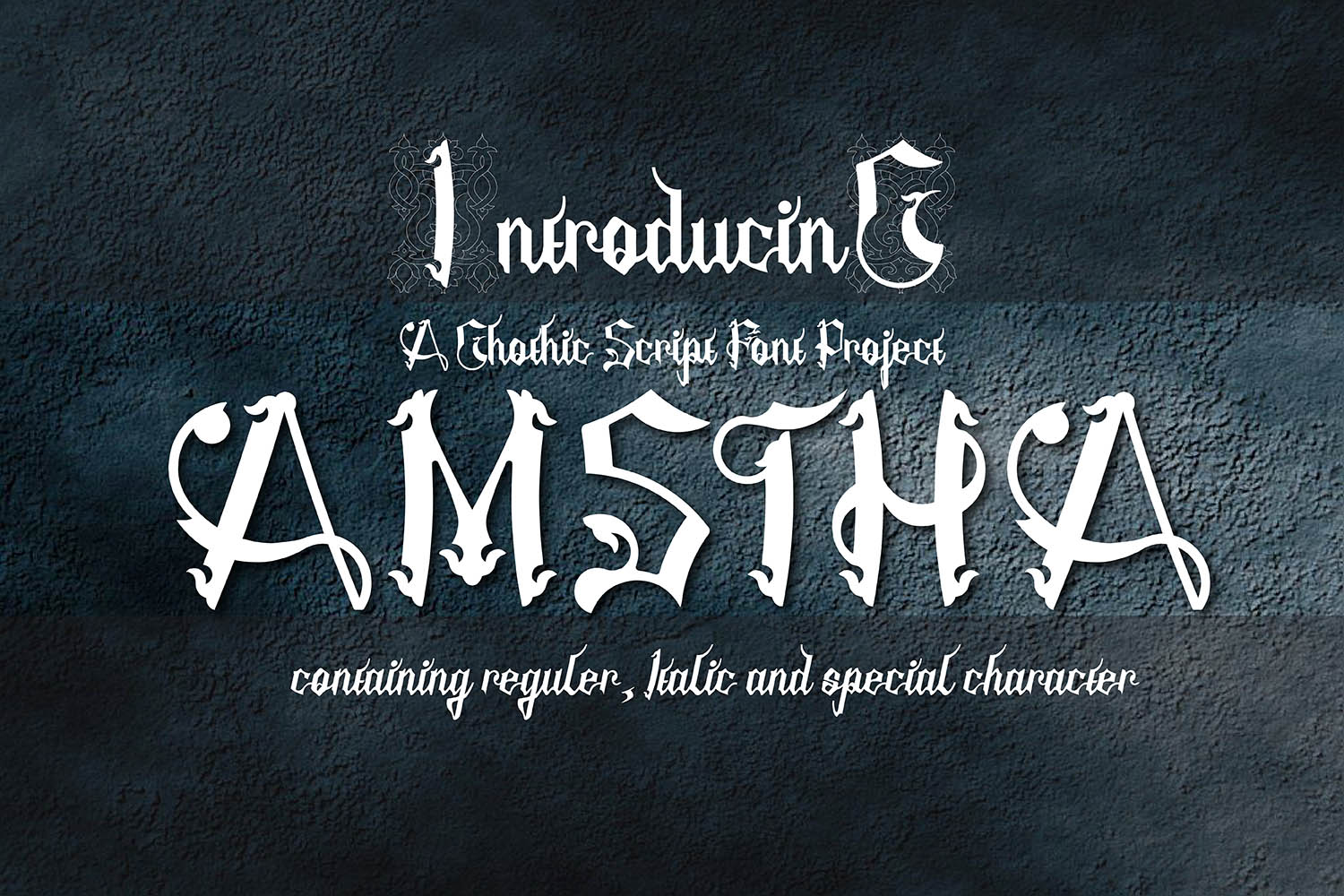
Amstha: A Dark and Stylish Blackletter Font for Moody Designs
Amstha is a gothic blackletter font that brings a dark, dramatic flair to any design project. Its torn and ripped style makes it ideal for themes that lean into the moody, mysterious, or edgy. Whether you're creating a logo, a poster, or a branding element, Amstha can help you achieve a look that feels both timeless and modern.
This unique font isn’t just about aesthetics—it’s about storytelling. The rough edges and heavy strokes of Amstha evoke a sense of history, rebellion, or intrigue. It’s a powerful tool for designers who want to communicate mood without relying on color or imagery alone.
What Makes Amstha Stand Out?
Unlike traditional serif or sans-serif fonts, Amstha uses a blackletter style that mimics the look of old manuscripts and medieval calligraphy. The font’s irregular shapes and jagged edges give it a raw, unpolished feel that can add depth to your work. This makes it particularly popular in genres like horror, fantasy, alternative fashion, and dark-themed branding.
One of the reasons people are drawn to Amstha is its versatility. While it has a strong visual identity, it can still be used in a variety of contexts—ranging from subtle text elements to bold headline displays. However, its strength also means it needs to be used thoughtfully.
Common Mistakes When Using Amstha
Many users fall into the trap of overusing Amstha, thinking that more is always better. But this font works best when used strategically. If you apply it to large blocks of text, it can become difficult to read and lose its intended impact. Instead, use it for headlines, logos, or short phrases where its visual appeal can shine without compromising legibility.
Another common mistake is not considering the context. Amstha may not be suitable for every project. For example, using it in a corporate or professional setting could clash with the tone of the message. Always ask yourself: does this font align with the brand’s voice and the audience’s expectations?
Some designers also overlook the importance of licensing. Amstha is a commercial font, so make sure you understand the terms of use before downloading or purchasing it. Failure to do so could lead to legal issues, especially if you’re using it for business purposes.
How to Avoid Common Pitfalls
To get the most out of Amstha, start by testing it in different scenarios. Try it with various background colors, sizes, and layouts to see how it performs. This will help you determine where it works best and where it might not be the right choice.
Consider pairing Amstha with simpler fonts to balance the design. For instance, using a clean sans-serif font for body text while reserving Amstha for headings can create a harmonious contrast. This approach keeps the design visually interesting without overwhelming the viewer.
Also, pay attention to the font’s weight and style variations. Some versions of Amstha may have more pronounced texture or different stroke thicknesses. Choose the version that best matches your design goals and the overall aesthetic you’re going for.
What to Check Before Using Amstha
Before finalizing your design, check how Amstha renders on different devices and screen sizes. Some fonts can appear differently on mobile versus desktop, which can affect readability and user experience. Testing across platforms ensures consistency.
Additionally, verify that the font is properly embedded or licensed for your intended use. If you’re working on a website, make sure the font file is optimized for web use and doesn’t slow down page load times. For print projects, ensure that the font is high-resolution and suitable for the printing process.
Finally, consider the cultural or thematic relevance of the font. While Amstha is versatile, it may not fit all narratives. Think about whether the font’s aesthetic supports the message you’re trying to convey. Sometimes, a more neutral font might be more effective than a highly stylized one.
Realistic Examples of Effective Use
Imagine you’re designing a poster for a gothic music festival. Amstha could be used for the event name, giving it a dark, mysterious vibe that matches the theme. Pairing it with a simple, readable font for the date and location would create a balanced and professional look.
In another scenario, a small business owner might use Amstha for a logo that represents a boutique specializing in vintage clothing. The font’s historical feel could reinforce the brand’s connection to the past while still feeling fresh and relevant.
For a blog post about dark fantasy literature, using Amstha in section headers could add an extra layer of atmosphere, making the content more engaging for readers who appreciate the genre.
Final Thoughts on Choosing Amstha
Amstha is a powerful tool for designers looking to add a touch of darkness, drama, or nostalgia to their work. But like any design element, it requires careful consideration. By understanding its strengths and limitations, you can avoid common mistakes and use it effectively.
Whether you’re a beginner or an experienced designer, taking the time to explore Amstha’s potential can lead to more creative and impactful results. Just remember: the goal is to enhance your design, not overpower it. With the right approach, Amstha can become a valuable asset in your design toolkit.