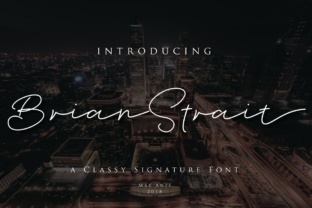
Brian Strait: A Timeless Font for Creative Expression
Brian Strait is a font designed to elevate the visual appeal of creative projects with its elegant and sophisticated style. It offers a balance between simplicity and class, making it an appealing choice for designers, artists, and professionals who want to add a refined touch to their work. While there are many fonts available in the market, Brian Strait stands out due to its unique characteristics that cater to specific design needs.
Unlike some more modern or experimental fonts, Brian Strait maintains a classic feel while still being versatile enough for various applications. Its clean lines and balanced structure make it easy to read, even at smaller sizes, which is a significant advantage for projects that require both aesthetics and readability.
What Makes Brian Strait Distinct?
Brian Strait distinguishes itself through its combination of elegance and practicality. The font’s design allows it to blend seamlessly into different types of content, whether it's a logo, a website header, or a printed document. Its subtle details contribute to a sense of sophistication without overwhelming the viewer.
One of the key features of Brian Strait is its versatility. It can be used in both digital and print formats, making it a reliable option for a wide range of projects. This adaptability is particularly valuable for designers who need a font that can perform well across multiple platforms and mediums.
The font also has a strong visual presence, which makes it ideal for situations where the text needs to stand out. However, this eye-catching quality doesn’t come at the expense of legibility. Brian Strait maintains a clear and readable form, ensuring that it remains functional even in more complex layouts.
Comparing Brian Strait to Similar Fonts
When evaluating fonts, it's important to consider how they compare in terms of style, usability, and suitability for different tasks. Brian Strait falls into a category of fonts that prioritize clarity and refinement, making it a good alternative to other similar options.
For instance, compared to more decorative or script-style fonts, Brian Strait offers a more restrained and professional look. This makes it less suitable for highly stylized designs but more appropriate for projects that require a polished and consistent appearance. On the other hand, when compared to minimalist sans-serif fonts, Brian Strait provides a slightly more distinctive character while still maintaining a clean aesthetic.
Designers often choose fonts based on the tone they want to convey. Brian Strait is well-suited for projects that aim to communicate professionalism, creativity, or a sense of timeless style. In contrast, other fonts may be better suited for more casual or avant-garde applications.
Strengths and Tradeoffs of Brian Strait
Brian Strait has several strengths that make it a compelling choice for certain design scenarios. Its ability to maintain readability at smaller sizes is a major advantage, especially for projects that involve body text or detailed layouts. Additionally, its balanced proportions ensure that it works well in both short and long-form content.
Another strength is its compatibility with different design styles. Whether used in a modern, clean layout or a more traditional format, Brian Strait adapts well, offering flexibility for various creative directions. This makes it a useful tool for designers who want to maintain a cohesive look across multiple elements of a project.
However, like any font, Brian Strait has its limitations. Its relatively subdued character may not be the best fit for projects that require a bold or highly expressive typeface. In such cases, alternative fonts with more pronounced features might be more appropriate. Additionally, while Brian Strait is visually appealing, it may not offer the same level of uniqueness as some more specialized or niche fonts.
Best Fit Situations for Brian Strait
Brian Strait is most effective in scenarios where a refined and professional appearance is desired. It works well for branding materials, such as logos, business cards, and stationery, where a clean and elegant look is essential. Its readability also makes it a good choice for headings and titles in publications, websites, or presentations.
In digital environments, Brian Strait can enhance the visual appeal of web design elements, such as navigation menus, call-to-action buttons, or section headers. Its structured form ensures that it remains legible on screens of varying sizes and resolutions, which is an important consideration for user experience.
For print-based projects, Brian Strait’s clarity and balance make it suitable for brochures, reports, and other documents that require a polished appearance. Its ability to maintain consistency across different formats adds to its value as a versatile font option.
When Brian Strait May Not Be the Right Choice
While Brian Strait is a strong contender in many design contexts, there are situations where it may not be the optimal choice. For example, if a project requires a highly stylized or unconventional font, Brian Strait’s more traditional form may not meet the desired aesthetic. In such cases, other fonts with more distinctive or experimental features could be more appropriate.
Additionally, for projects that prioritize maximum visual impact, Brian Strait’s understated nature may not provide the level of attention-grabbing power needed. Designers looking for a font that commands immediate attention might find other options more suitable, especially in contexts where boldness or uniqueness is a priority.
It's also worth considering the target audience when selecting a font. If the intended viewers are more familiar with contemporary or digital design trends, a more modern font might resonate better than one with a classic feel. However, for audiences that appreciate traditional or refined aesthetics, Brian Strait can be a strong and effective choice.
Practical Examples and Use Cases
Consider a scenario where a designer is creating a brand identity for a boutique clothing line. The goal is to convey a sense of sophistication and timelessness. In this case, Brian Strait could be used for the brand’s logo and marketing materials, providing a consistent and elegant look that aligns with the brand’s image.
Another example involves a website redesign for a professional services firm. The site needs to appear trustworthy and polished, with a clean and organized layout. Using Brian Strait for headings and subheadings could help reinforce the site’s professional tone while maintaining visual harmony across different sections.
For a printed annual report, Brian Strait could be used for section titles and captions, ensuring that the document maintains a cohesive and refined appearance. Its readability and structure would support the report’s informational purpose while enhancing its overall visual appeal.
Decision Factors for Choosing Brian Strait
When deciding whether to use Brian Strait, it's important to evaluate the specific needs of the project. Consider factors such as the desired tone, the intended audience, and the context in which the font will be used. These elements can significantly influence the effectiveness of the font choice.
Designers should also assess how Brian Strait interacts with other design elements, such as colors, images, and layout structures. A font that looks great in isolation may not perform as well within a larger composition. Testing the font in different scenarios can help determine its suitability for the project at hand.
Finally, it's helpful to compare Brian Strait with other fonts that are commonly used in similar contexts. This comparison can provide insights into the strengths and weaknesses of each option, allowing for a more informed decision based on practical considerations rather than personal preference alone.