Discover the Charm of Mary-Lou: A Versatile Script Font for Designers
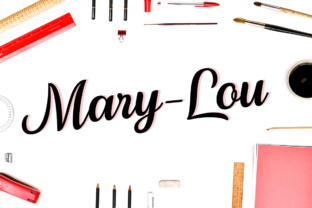
Mary-Lou is a script font that blends elegance with approachability, making it a compelling choice for designers seeking a touch of personality in their work. Its fluid strokes and balanced structure offer a sense of warmth that can elevate everything from logos to headlines. Unlike more formal or ornate script fonts, Mary-Lou maintains a friendly tone without sacrificing sophistication, which makes it particularly well-suited for projects that aim to feel accessible yet polished.
When considering typography options, the right font can significantly influence how a design is perceived. Mary-Lou stands out in this regard by offering a unique balance between readability and visual interest. While many script fonts lean toward being either too decorative or too rigid, Mary-Lou finds a middle ground that works across a variety of applications.
What Makes Mary-Lou Distinct?
One of the key characteristics of Mary-Lou is its legibility at smaller sizes. This makes it a practical option for body text in certain contexts, though it’s most commonly used for display purposes. The font’s consistent stroke widths and open letterforms help maintain clarity, even when used in tight layouts. This quality sets it apart from other script fonts that may become difficult to read when scaled down.
The font also features a range of ligatures and alternate characters, which allow for greater customization and stylistic flexibility. These details can be especially useful for designers who want to add a personal touch to their work without compromising on professionalism. Additionally, Mary-Lou includes both uppercase and lowercase variants, giving users more control over how they incorporate it into their designs.
Comparing Mary-Lou to Similar Fonts
When evaluating script fonts, it’s helpful to consider how they compare in terms of style, usability, and versatility. Mary-Lou shares some similarities with fonts like Pacifico or Great Vibes, which are also popular for their handcrafted feel. However, unlike these alternatives, Mary-Lou avoids excessive flourishes that might make it less suitable for modern or minimalist designs.
Fonts such as Lobster or Indie Flower, while visually striking, often have a more casual or informal tone. Mary-Lou, by contrast, offers a refined aesthetic that can fit into both contemporary and traditional design schemes. This adaptability makes it a good choice for projects that require a subtle but distinctive typographic voice.
For those looking for a more structured alternative, fonts like Playfair Display or Cinzel provide a similar level of elegance but with a different visual character. These options tend to be more formal and less fluid than Mary-Lou, which may make them better suited for editorial or corporate branding rather than creative or personal projects.
Strengths and Best-Fit Situations
Mary-Lou excels in situations where a warm, inviting tone is desired. It’s particularly effective for branding elements such as logos, headings, and promotional materials. Its friendly appearance can help create an emotional connection with the audience, which is valuable in fields like hospitality, education, or lifestyle branding.
Designers working on projects that require a humanized feel—such as wedding invitations, social media graphics, or personal websites—may find Mary-Lou to be an excellent fit. Its natural flow and soft curves contribute to a sense of approachability that can enhance the overall user experience.
Another advantage of Mary-Lou is its compatibility with a wide range of design styles. Whether paired with a clean sans-serif or a bold serif, it can add visual interest without clashing. This makes it a versatile choice for multi-typeface compositions, where balance and harmony are essential.
Tradeoffs and Limitations
Despite its strengths, Mary-Lou may not be the best choice for every project. Its script style can sometimes feel too casual for highly professional or technical contexts. In such cases, a more restrained typeface might be more appropriate. Additionally, because of its decorative nature, it may not be ideal for long blocks of text, where readability is paramount.
Users should also consider the availability of the font. While Mary-Lou is widely available through most font marketplaces, it may not be included in all design software by default. This could require additional steps to integrate into a workflow, which might be a consideration for some designers.
When Mary-Lou Is the Right Choice
Mary-Lou is an excellent option when the goal is to convey a sense of charm and personality. For example, a small business owner looking to create a logo that feels welcoming and authentic might find Mary-Lou to be a perfect match. Similarly, a designer working on a personal blog or portfolio site could use it to add a touch of individuality without overwhelming the layout.
It’s also a strong candidate for projects that benefit from a handwritten or organic feel. This includes things like packaging design, signage, or digital illustrations where a custom look is desired. By using Mary-Lou, designers can achieve a more personalized aesthetic that stands out from mass-produced typefaces.
When Other Options May Be Better
For projects that require a more formal or structured appearance, other fonts may be more suitable. For instance, a law firm or financial institution might prefer a serif font like Georgia or Baskerville, which conveys authority and reliability. In these cases, the refined and professional tone of Mary-Lou may not align with the brand’s identity.
Similarly, if a design needs to be highly readable at small sizes, a sans-serif font like Helvetica or Arial could be a better choice. While Mary-Lou is legible in many scenarios, it may not perform as well in environments where clarity is critical, such as signage or instructional materials.
Conclusion: Making an Informed Decision
Choosing the right font involves understanding the specific needs of a project and the message it aims to convey. Mary-Lou offers a unique combination of charm and readability that can enhance a wide range of design work. However, it’s important to evaluate whether its characteristics align with the goals of the project and the expectations of the audience.
By considering factors such as style, usability, and context, designers can determine whether Mary-Lou is the best fit for their needs. When used thoughtfully, it can add a distinct and appealing visual element to any design, helping to create a more engaging and memorable experience.